
When Buying a House Who Pays for the Inspections
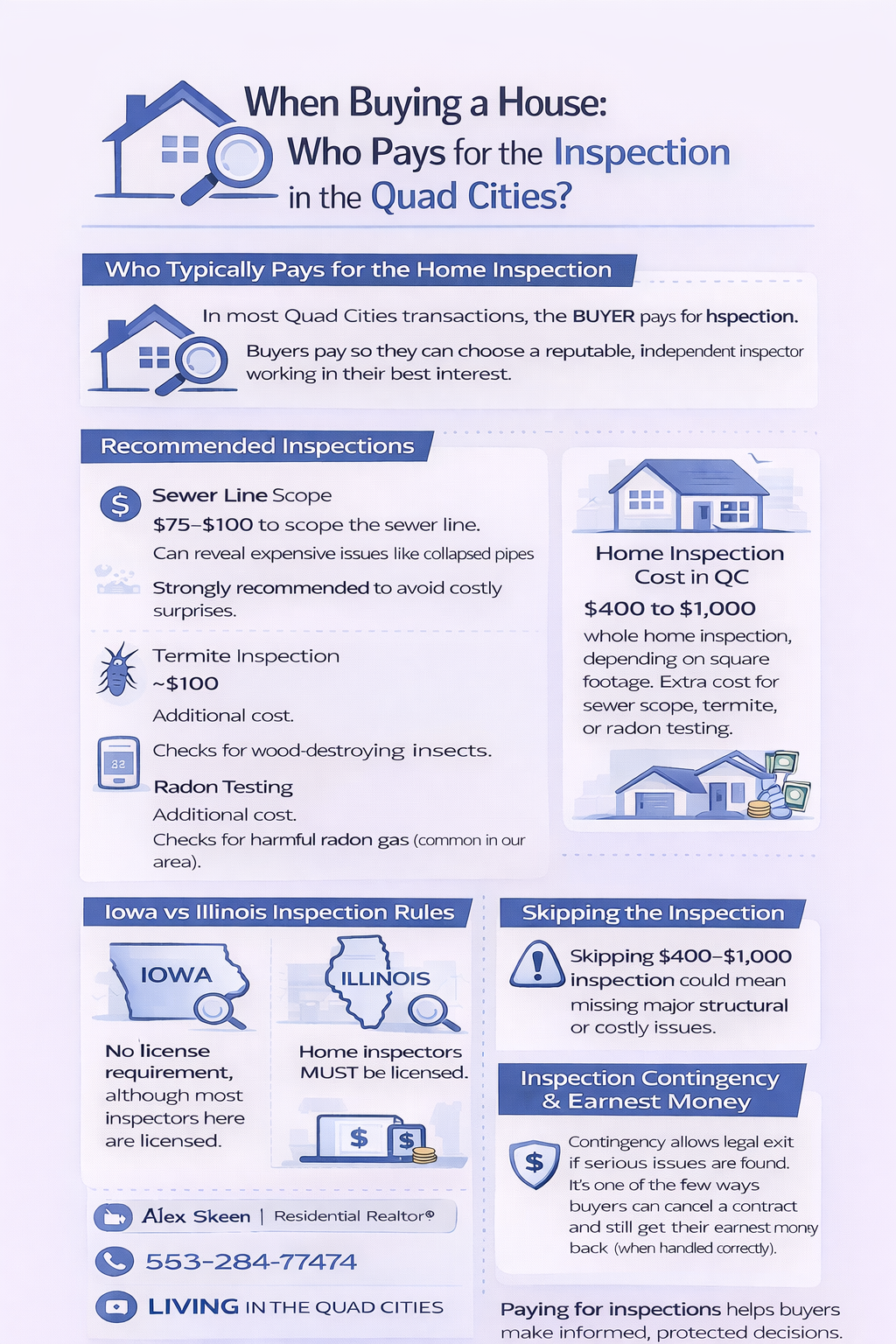
When buying a house in the Quad Cities, the buyer almost always pays for the home inspection. While it can be negotiated, it is usually in the buyer’s best interest to pay so they can choose a reputable, independent inspector. A typical whole home inspection costs between $400 and $1,000, with sewer scopes and other tests costing extra. Inspections are meant to uncover structural issues, safety concerns, and major cost items not to make an older home brand new.
Key Takeaways
In most Quad Cities transactions, the buyer pays for the home inspection.
Letting the buyer pay ensures the inspection stays independent and unbiased.
Whole home inspections typically cost $400 to $1,000, depending on size.
Sewer line scopes are strongly recommended and can save buyers tens of thousands of dollars.
Illinois requires licensed inspectors. Iowa does not, though many inspectors work on both sides of the river so most QC inspectors are licensed but not all.
The inspection contingency can protect a buyer’s earnest money when handled correctly.
Inspections are meant to identify structural, safety, and major cost issues, not to bring older homes up to modern building code.
Who Typically Pays for the Home Inspection in the Quad Cities?
In most Quad Cities transactions, the buyer pays for the home inspection.
Could you negotiate for the seller to pay? Yes.
Should you? Usually not.
As a buyer, you want control over who performs your inspection. You do not want the seller’s “uncle Bob” doing it. You want a reputable, independent inspector working in your best interest.
Paying for the inspection yourself protects that independence.
Can the Seller Pay for the Inspection?
Technically, yes. It is negotiable in the contract.
In practice, I rarely recommend it.
When buyers pay for their own inspection, they control the process, the inspector, and the quality of the work. That independence matters.
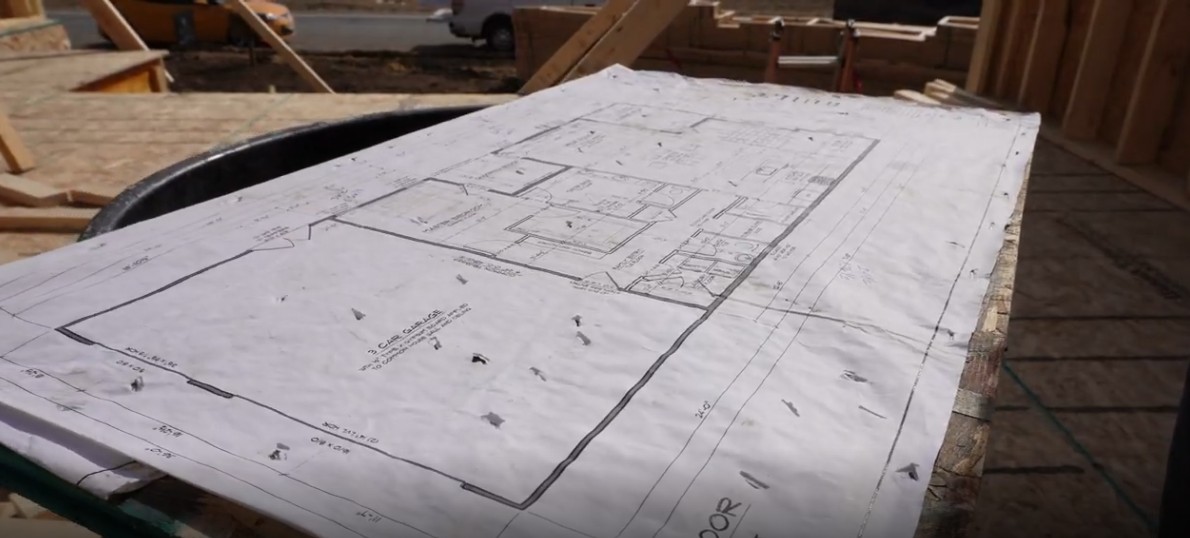
new construction home in bettendorf iowa
How Much Does a Home Inspection Cost in the Quad Cities?
Inspection cost depends largely on square footage, but generally:
Whole home inspection: $400 to $1,000
Sewer line scope: Additional cost
Termite (Wood Destroying Insect Report): Additional cost
Radon test: Additional cost
Those “extras” are not automatically included in a standard whole home inspection.
Inspections I Strongly Recommend in the Quad Cities
Sewer Line Scope
This is a big one.
Sewer lines are not covered in a standard whole home inspection. Yet they can be one of the most expensive problems a homeowner will ever face.
I have seen sewer scopes reveal collapsed sewer lines multiple times. In those situations, my buyers had the sewer line replaced before closing, saving them tens of thousands of dollars.
Skipping a $75 -$100 sewer scope to risk a $10,000–$20,000 repair later is not a smart gamble.
Termite Inspection
Wood destroying insect reports are also important, especially in certain properties that show signs of termites and most loans require them.
when buying a house who pays for inspections
Iowa vs Illinois Inspection Rules
There is one key difference buyers should know.
In Illinois, home inspectors must be licensed.
In Iowa, inspectors do not have to be licensed.
Most Quad Cities inspectors are licensed because they work on both sides of the river. However, not every inspector is. That is another reason why choosing your own inspector matters.
What Happens If You Skip the Inspection?
Yes, I have seen buyers skip inspections.
Most of the time, nothing catastrophic happens. Many homes are structurally sound. But it is not about the majority of cases. It is about the one time something major is wrong.
You do not want to be the buyer who skipped a $800 inspection and later discovers a structural issue or collapsed sewer line that costs ten's of thousands to repair.
Inspections are about risk management.
How the Inspection Contingency Protects Your Earnest Money
The inspection contingency is one of the few legal exit ramps in a purchase contract.
It does not automatically mean you can walk away for any reason. But when handled correctly, it can allow you to:
Request repairs
Negotiate credits
Terminate the contract and recover earnest money
This is where having a knowledgeable agent matters. The contract must be written and executed correctly for this protection to work.
What Inspections Are Really For
Buyers need to understand something important.
An inspection is not meant to make a house perfect. Even brand-new homes will have issues listed.
The purpose of an inspection is to identify:
Structural problems
Safety issues
Major cost items
It is not about bringing a 1950s house up to 2026 building code. Building codes change constantly. A home built decades ago may not meet today’s code, but that does not automatically make it unsafe.
Focus on the big issues. That is what matters.
Frequently Asked Questions (FAQ)
Q: When buying a house who pays for the inspection in the Quad Cities?
A: Typically the buyer pays, though it can be negotiated in the contract.
Q: Should I let the seller pay for the inspection?
A: It is usually better for buyers to pay so they can choose a reputable, independent inspector.
Q: How much does a home inspection cost in the Quad Cities?
A: Most whole home inspections range from $400 to $1,000 depending on size, with sewer scopes and other tests costing extra.
Q: Is a sewer scope really necessary?
A: In my experience, yes. It has saved buyers tens of thousands of dollars.
Q: Are inspectors licensed in Iowa and Illinois?
A: Inspectors must be licensed in Illinois. Iowa does not require licensing, though many inspectors are licensed to work on both sides.
Making Your Move Easier
Buying a home is one of the largest financial decisions you will ever make. Inspections are not just another step. They are protection.
With the right strategy and guidance, you can use inspections to protect your investment and avoid costly surprises.
Alex Skeen is ready to help you every step of the way.
Here’s how to get in touch:
Email: [email protected]
Phone: 563-284-7474
YouTube: LIVING IN THE QUAD CITIES
Website: Living in the Quad Cities


